
Cooking-Line Grease
Airborne oil and splatter settle near fryers, ranges and prep equipment. A degreaser matched to the surface helps break that film before mechanical agitation and recovery.
Serving Philadelphia, Pennsylvania & surrounding areas
Open 24/7
Remove built-up grease, food soil and grout discoloration with a cleaning plan scheduled around your restaurant's operating hours.
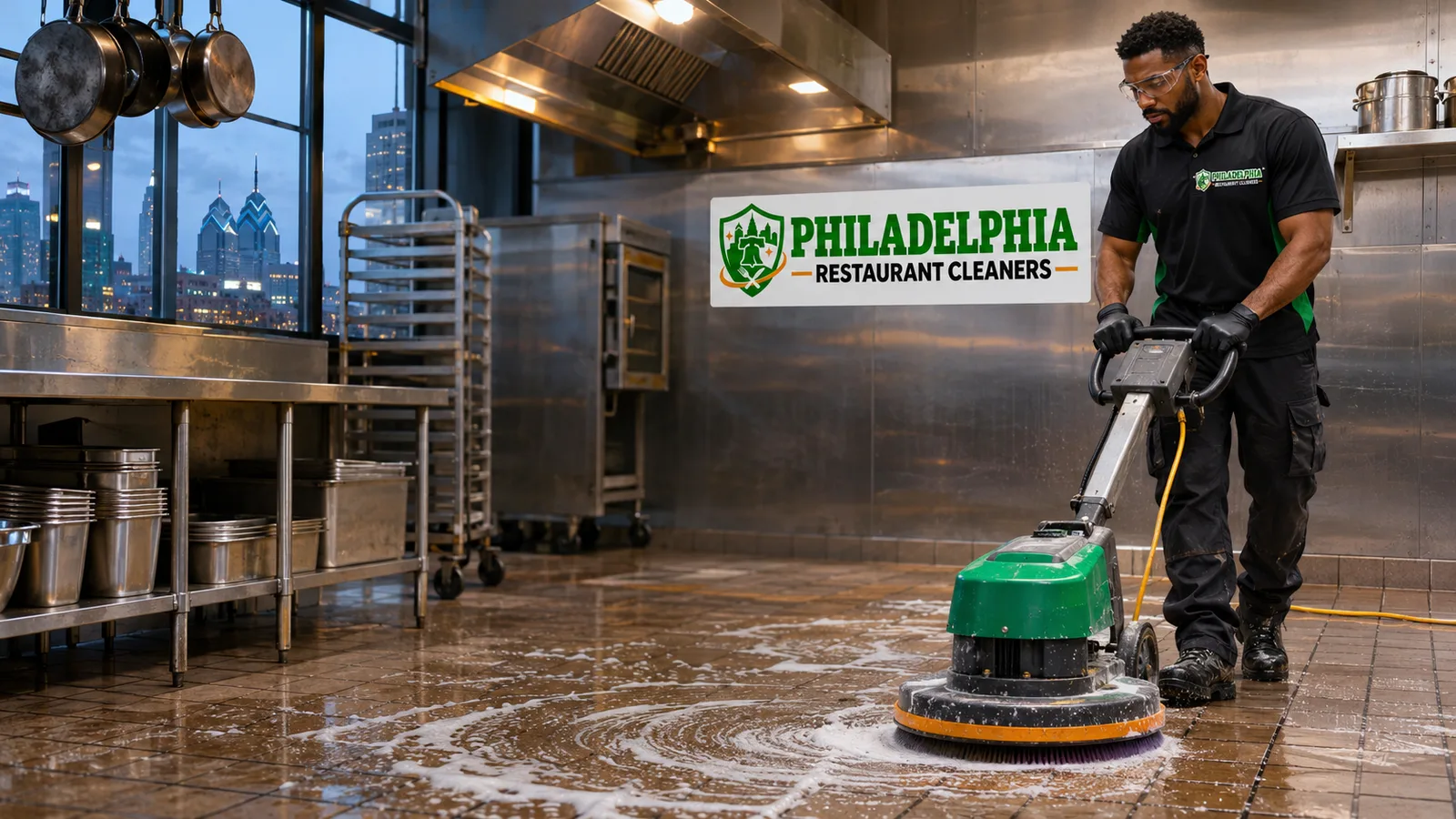
Commercial Kitchen Floor Cleaning targets the grease film and compacted soil that ordinary mopping leaves behind. Philadelphia Restaurant Cleaners cleans tile, grout and other suitable hard floors using commercial degreasers, agitation and controlled soil recovery. The aim is a floor that looks cleaner, feels less greasy underfoot and is easier for staff to maintain between professional visits.
Kitchen floors collect cooking oil, tracked-in dirt, food residue and detergent film. Soil settles into grout joints, around equipment legs and along wall edges where a mop cannot apply enough agitation. Adding more detergent can make the problem worse if the loosened grease is spread across the floor or the cleaning solution is not fully recovered.
The cleaning scope is adapted to the floor material, kitchen layout and operating schedule.
Before work starts, we identify heavy buildup, sensitive transitions, damaged grout and areas where water control requires extra care. The written scope can cover a one-time restorative cleaning or recurring restaurant floor cleaning services.
Request a Callback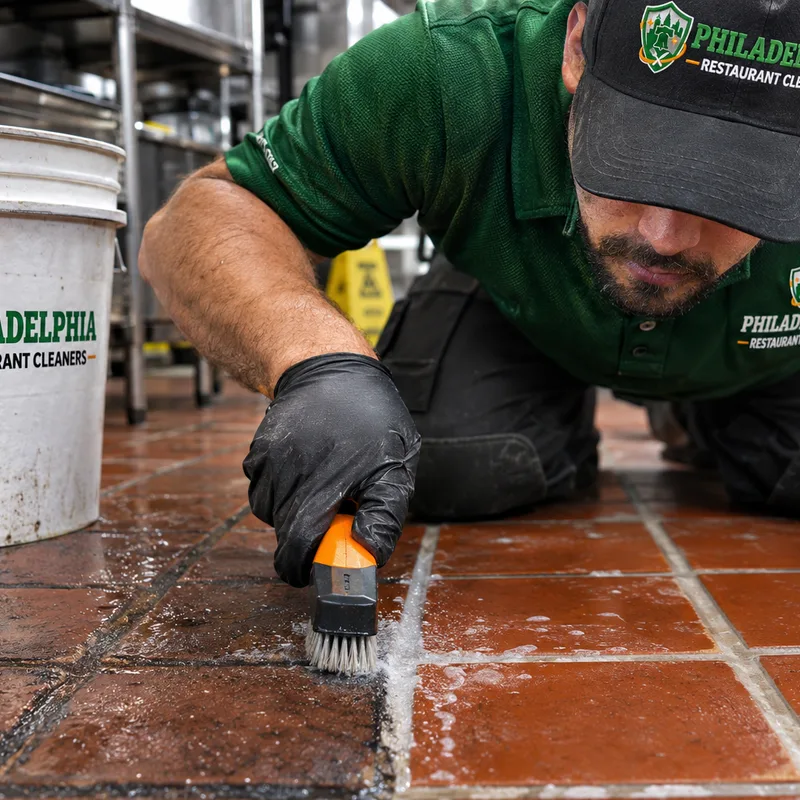
Focused agitation lifts oily residue from textured tile and grout joints.
Quarry tile and ceramic tile are common commercial kitchen surfaces because they tolerate demanding use, but their grout joints and textured faces trap oily soil. Restaurant tile cleaning starts with dry debris removal and a suitable degreaser. The solution is given time to work, then the surface is agitated with equipment and brushes selected for the tile's texture and condition.
Restaurant grout cleaning needs focused agitation. Grease darkens porous cement-based grout, especially near cooking lines, dish areas and floor drains. Edge tools and grout brushes reach joints that a rotary machine may pass over. The suspended residue is then recovered rather than pushed into another part of the kitchen.
Cleaning can improve the appearance of sound grout, but it cannot rebuild cracked, missing or chemically damaged joints. We flag visible defects so they are not mistaken for remaining soil. We also account for transitions to dining-room flooring, thresholds and base tile while keeping the scope centered on the kitchen floor.
Airborne oil and splatter settle near fryers, ranges and prep equipment. A degreaser matched to the surface helps break that film before mechanical agitation and recovery.
Detail work targets recessed joints, wall lines, corners and equipment perimeters where soil tends to remain after routine mopping.
Food residue, detergent film and tracked moisture can collect near sinks and floor drains. Cleaning is planned to control water and keep debris out of drain openings.
Slip-resistant tile has low points that hold grime. Appropriate brushes reach the texture more effectively than a flat mop.
Repeated cleaning with excessive chemical or dirty solution can leave a tacky film. Thorough rinsing and recovery remove loosened residue from the work area.
A planned schedule prevents heavy buildup from becoming the normal condition. Frequency depends on cooking volume, floor texture and the restaurant's own daily cleaning routine.
We identify the flooring material, grease concentration, grout condition, floor drains, thresholds and equipment that can or cannot be moved. The inspection also establishes access, water availability and the best service window.
Loose debris is removed, movable items are cleared and sensitive adjoining surfaces are accounted for. Caution controls may be used to keep staff away from wet work areas during cleaning.
A commercial cleaner or degreaser suitable for the surface is distributed across manageable areas. Proper dwell time allows the chemistry to loosen oily soil before scrubbing begins.
Rotary equipment, deck brushes or other appropriate tools work the floor texture and grout joints. Corners, wall lines and equipment edges receive separate attention.
The dirty solution is collected with wet-recovery equipment where conditions permit. Controlled rinsing removes suspended residue without treating the floor drain as a disposal point.
We inspect the cleaned floor, address remaining cleanable spots and discuss drying conditions. Staff should keep traffic off the surface until it is dry enough for normal use.
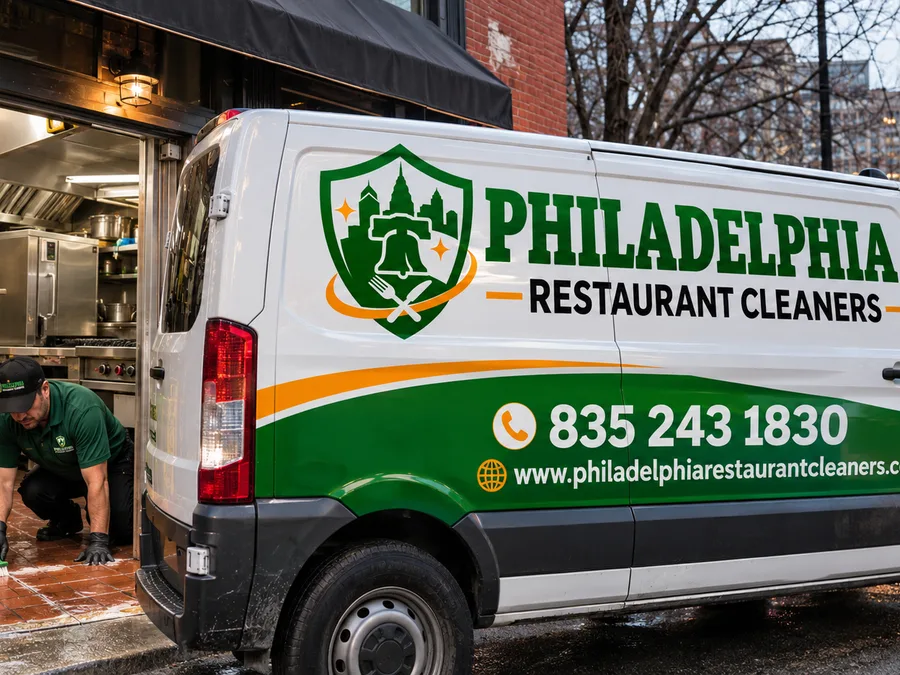
Restaurant density and operating patterns affect how floor work is planned. In Center City, compact kitchens and limited loading access can require smaller equipment and tightly timed arrival. Old City has many restaurants in adapted older buildings, where narrow passages, uneven transitions and limited equipment clearance deserve attention during setup.
South Philadelphia includes busy dining corridors and neighborhood restaurants where late service can push cleaning into overnight or early-morning windows. In University City, kitchens serving students, hospital staff and office workers may need work staged around long operating hours. Fishtown restaurants often occupy converted commercial or industrial spaces, so floor materials and transitions can vary within one kitchen.
Winter salt and street grit tracked through receiving doors add abrasive soil to kitchen floors. Wet weather also increases tracked moisture, so entry and back-of-house maintenance need to work together. Restaurant floor cleaning in Philadelphia is therefore scheduled around real access conditions, service hours and the time needed for safe drying, rather than treated as a generic mop-and-go visit.
Compact equipment supports work in tight urban kitchens and restricted service corridors.
Commercial kitchen floor cleaning in Philadelphia typically costs about $300 to $1,200 per visit. A small kitchen with moderate soil may fall near the lower end, while a large or heavily greased floor with extensive grout detail can exceed that range.
Final pricing depends on cleanable square footage, floor material, grease severity, equipment access, movable fixtures, water recovery needs and whether service is one-time or recurring. Overnight scheduling and difficult loading access may also affect labor. The exact cost is confirmed after an inspection or a detailed review of the work area.
A useful quote should define which rooms and surfaces are included, how equipment access will be handled, and whether edge and grout work are part of the service. Ask how the contractor will recover dirty solution and what drying conditions staff should expect. A low price can represent a light scrub rather than the restorative restaurant floor degreasing needed for established buildup.
Cleaning frequency should follow the kitchen's actual soil load. High-volume frying, textured tile and heavily used receiving routes generally create faster buildup than light cooking. Daily sweeping and mopping remain the restaurant's responsibility between professional visits. Use clean mop solution, follow the chemical label, change dirty water and avoid mixing cleaning products.
Professional cleaning does not certify regulatory compliance or guarantee that a damaged floor will become slip-resistant. The Philadelphia Department of Public Health regulates food establishments, while the floor manufacturer's care instructions govern compatible chemistry. Sound flooring, prompt spill response, suitable footwear and consistent staff procedures all matter alongside cleaning.
If grease keeps returning after routine mopping, arrange an assessment that identifies the floor material, problem areas and practical service frequency before work is scheduled.
Call for a Free QuoteYes, cleaning can usually be scheduled after closing, before opening or during another approved shutdown window. The workable time depends on access, soil level and drying needs. Compact Center City kitchens may require staged cleaning because equipment and exit routes cannot be blocked at the same time.
A typical visit may take a few hours, but the duration depends on square footage, grease buildup, grout detail and equipment access. Setup and soil recovery take longer in spaces with narrow passages or fixed cooking lines. The work window should also include enough drying time before kitchen traffic resumes.
No, degreasing removes cleanable oily soil but cannot reverse permanent discoloration, worn tile, damaged coatings or deteriorated grout. A small test area can help separate surface buildup from material damage. Deeply stained cement-based grout may remain uneven even after the grease has been removed.
Movable items should be cleared when it is safe and practical, while connected or fixed equipment normally stays in place. The scope should identify who moves each item before the appointment. Technicians can detail accessible perimeters, but they should not disconnect gas, electrical, plumbing or fire-suppression components.
The right interval is based on grease production, foot traffic, floor texture and the effectiveness of daily maintenance. A high-volume fry line may need frequent degreasing, while a lighter-use prep kitchen may need periodic restorative work. Winter salt and grit near receiving entrances can justify added attention during colder months.
Indoor pressure washing is not automatically appropriate because uncontrolled spray can reach equipment, walls, electrical components and food-contact areas. A controlled scrub-and-recovery method is often better suited to occupied commercial kitchens. The correct approach depends on the floor, drainage, waterproofing and equipment layout.
A clear quote should state the cleanable area, included surfaces, soil condition, preparation responsibilities, cleaning method, scheduling window and price basis. It should also identify access limits and any damaged grout or flooring that cleaning cannot repair. Philadelphia locations with restricted loading or parking should disclose those conditions during scheduling.
Tell Philadelphia Restaurant Cleaners about your floor material, kitchen size, grease buildup and preferred service window. We will help define a practical scope for one-time cleaning or recurring maintenance.
Tell us about your restaurant, schedule, and cleaning needs. We will help define the right service plan for your space.