
Kitchen Floors and Accessible Surfaces
Loose soil and food debris are removed before floor cleaning. The scope may include mats, baseboards, floor drains and accessible equipment exteriors, with attention to grease-prone traffic lanes.
Serving Philadelphia, Pennsylvania & surrounding areas
Open 24/7
A dependable cleaning crew works after closing so your kitchen, dining room, bar and restrooms are ready for the next service.
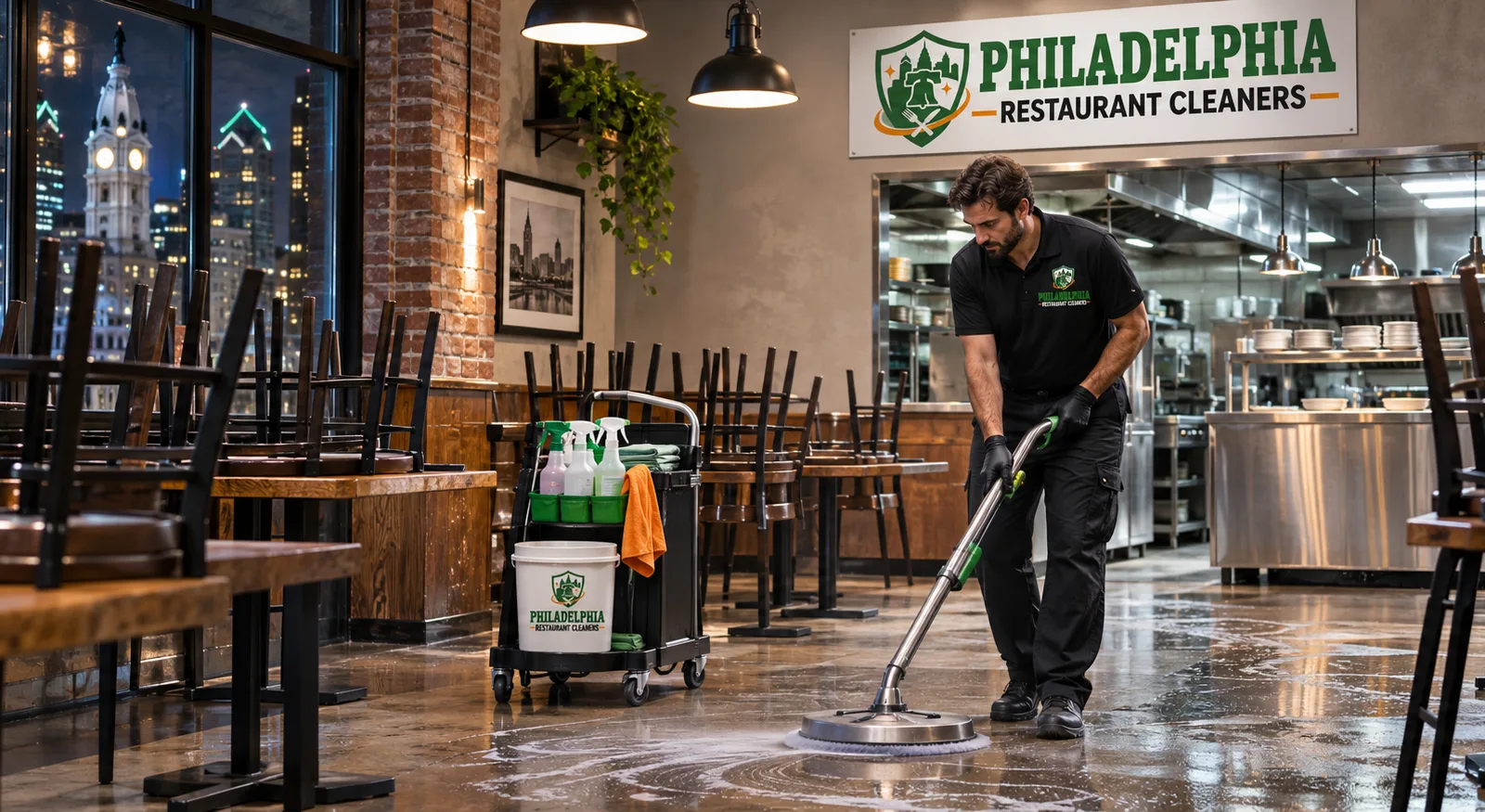
Overnight Restaurant Cleaning gives your staff a clean, orderly workplace without disrupting guests or slowing food service. After the last table leaves, the cleaning crew follows an agreed scope for the kitchen, front of house, employee areas and restrooms. The work is completed before your opening team arrives.
Philadelphia restaurants face conditions that general office cleaning does not address. Grease settles on floors near the cookline. Food debris collects under equipment and booths. Winter salt and wet grit enter through dining room doors, while busy outdoor dining periods can increase tracked soil. In compact restaurant spaces common around Center City and Old City, a careful route and secure closeout matter because crews may work around narrow aisles, stored seating and shared entrances.
Recurring work is organized around each establishment’s closing time, access procedure and priorities.
A written scope identifies what is cleaned every visit, what rotates by schedule and how exceptions are reported.
Request a Callback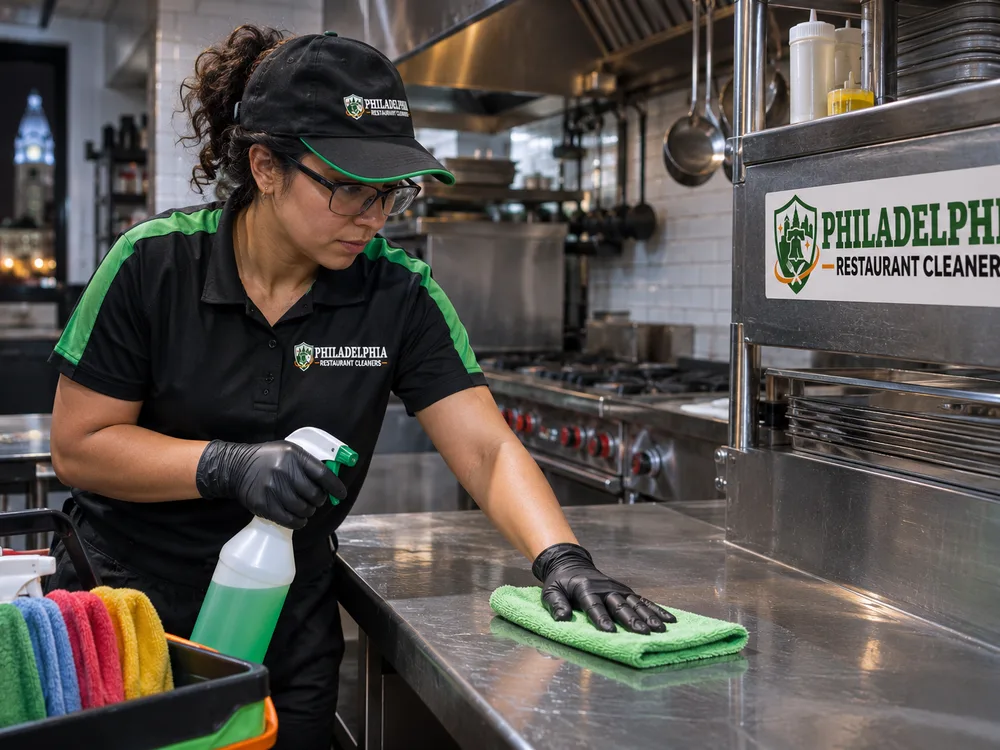
Defined tools and procedures reduce cross-use between kitchen, dining and restroom areas.
A restaurant night cleaning plan should separate food-contact responsibilities from general janitorial work. Nightly janitorial tasks commonly include sweeping and damp mopping dining floors, vacuuming carpeted areas, cleaning entrance glass, wiping tables and chairs as specified, emptying waste containers, replacing liners and cleaning staff areas.
Kitchen cleaning may include floors, baseboards, washable wall surfaces, floor drains, mats and the accessible exteriors of equipment. Crews can remove loose debris before applying the product and dwell time appropriate for the surface. Food-contact surfaces require products and procedures approved for that use, followed according to the product label. Restaurant staff should handle food storage, equipment shutdown and any sanitation tasks reserved by the establishment’s food-safety plan.
Restaurant Restroom Cleaning covers toilets, urinals, sinks, fixtures, partitions, dispensers, mirrors, touchpoints and floors. Supplies can be checked as part of the visit when stocking responsibilities are included in the scope. The crew should also address odors at their source rather than masking them with fragrance.
Commercial kitchen exhaust hoods, ducts, fans and fire-suppression components require specialized work beyond routine janitorial cleaning. Those systems should remain on their required inspection and service schedule.
Loose soil and food debris are removed before floor cleaning. The scope may include mats, baseboards, floor drains and accessible equipment exteriors, with attention to grease-prone traffic lanes.
Floors, booths, chairs, ledges, entrance glass and agreed touchpoints are cleaned after guests leave. Furniture is returned to the layout specified by management.
Fixtures, partitions, mirrors, dispensers and floors are cleaned and disinfected using dedicated tools. Restocking and supply reporting can be assigned in the written plan.
Interior containers are emptied, liners are replaced and surrounding surfaces are cleaned. Waste handling follows the restaurant’s designated storage and removal procedure.
Recurring Restaurant Cleaning can rotate less frequent tasks such as high dusting, detail cleaning around furniture, wall washing and cleaning beneath movable equipment.
The crew checks completed work, returns moved items, secures approved access points and reports spills, damage, pests or supply shortages that need management attention.
We review the kitchen, dining room, bar, restrooms, entrances, waste areas and staff spaces. The walkthrough identifies floor materials, grease accumulation, equipment boundaries and any areas that require special access.
The plan lists nightly tasks, rotating detail work, exclusions, approved products and responsible parties. It also records closing windows, alarm instructions, key control and the required completion time.
Management secures food, clears designated surfaces and confirms which equipment may be moved or cleaned. The crew receives site-specific instructions before starting recurring work.
Crews use separate tools for restroom and food-service areas, work through the approved route and observe product label directions, including dilution and contact time. Wet-floor controls remain in place while floors dry.
A closeout check confirms that assigned tasks are complete. Conditions outside the scope, such as an active leak, damaged fixture or pest evidence, are documented for the restaurant’s manager.
Service frequency and rotating tasks can change when operating hours, menu volume, seasonal traffic or the dining layout changes. A current scope keeps expectations clear for both teams.
Service planning changes with the building and operating pattern. Center City restaurants often have tight receiving windows, controlled loading access and heavy pedestrian traffic, so arrival timing and key control need to be settled before service begins. In Old City, restaurants operating in older commercial buildings may have compact back-of-house routes and limited storage for cleaning equipment.
Fishtown establishments may combine dining rooms, bars and event schedules, which makes the final guest departure time more useful than a fixed start time. University City restaurants can experience late-night demand and changing academic calendars, so managers may need different schedules during breaks or special events. South Philadelphia dining rooms often sit in closely spaced commercial corridors where crews must manage parking, waste access and quiet entry without blocking neighboring properties.
Philadelphia’s wet winters bring salt residue and gritty moisture onto entry floors. Hot, humid weather can make prompt waste removal and attention to floor drains more pressing. A Restaurant Janitorial Company should account for these conditions in the cleaning frequency rather than use the same plan throughout the year.
Daily Restaurant Cleaning works best when the scope is measurable. Terms such as “clean floors” are open to interpretation. A stronger scope names the floor type, cleaning method, frequency, edges to be addressed and responsibility for moving mats or furniture. It also states whether the crew supplies chemicals, liners and restroom consumables.
Color-coded microfiber cloths and mop heads help keep restroom tools separate from dining and kitchen tools. Product labels govern dilution, compatible surfaces and required dwell time. A disinfectant cannot do its intended job if it is wiped away before the labeled contact time, and adding extra concentrate does not make a product safer or more effective.
Managers should also know who supervises the shift, how missed tasks are reported and what happens when the restaurant closes late. Reliable Nightly Restaurant Cleaning in Philadelphia depends on access and communication as much as cleaning technique. The crew needs current alarm instructions, a secure key procedure and a named management contact for unusual conditions.
Routine janitorial cleaning supports an orderly facility, but it does not replace the restaurant’s food-safety program, pest-control work, equipment maintenance or specialized exhaust-system service. Keeping those responsibilities distinct prevents gaps and gives managers a clear record of who handles each task.
Request a CallbackRecurring overnight cleaning is generally priced after an on-site walkthrough rather than by a flat public rate. The quote reflects cleanable square footage, the number of restrooms, floor materials, kitchen grease conditions, visit frequency and the time available between closing and opening.
Access also affects labor. Stairs, distant waste storage, restricted loading areas and furniture that must be moved can extend each visit. A seven-night schedule may have a different per-visit structure than occasional cleaning because staffing and supplies can be planned consistently. Extra work after private events, seasonal outdoor dining or unusually heavy service should be defined before it is needed.
A useful proposal identifies nightly tasks, periodic tasks, exclusions, consumable responsibilities and the process for approving added work. Philadelphia Restaurant Cleaners confirms the exact price after inspecting the facility and agreeing on the service schedule.
Set clear expectations before the first overnight visit with a written scope, an access plan and a schedule that fits your closing and opening times.
Call for a Free QuoteYes, service can be scheduled around the establishment’s actual closing procedure and required opening time. Restaurants with late bar service in areas such as Fishtown or Center City should define a start window, a latest access time and what the crew should do if guests remain past the expected departure.
Staff should secure food, complete required equipment shutdown, clear the surfaces assigned for cleaning and communicate spills or hazards. The written plan should identify who moves mats, chairs and small equipment, especially in compact Old City back-of-house spaces where access can be limited.
They should be, and our plan uses dedicated or color-coded tools to reduce cross-use between restroom, dining and kitchen areas. Cloths, mop heads and buckets must also be cleaned, stored and replaced appropriately rather than carried indiscriminately through the restaurant.
Yes, supply checks and restocking can be included when the products and responsibility are listed in the scope. Management should specify items such as hand soap, paper products, liners and dispenser refills so the crew can report low stock before the next service.
Routine janitorial cleaning does not include internal hood, duct, fan or fire-suppression system service. Those components require qualified specialty work, while the overnight scope may address approved accessible exterior surfaces without opening or altering the system.
A start date can be set after the walkthrough, scope approval and access arrangements are complete. The lead time depends on visit frequency, closing hours, crew scheduling and whether the Philadelphia location needs keys, alarm credentials or building-management authorization.
Yes, recurring plans can be adjusted for private events, holiday demand and outdoor dining periods. The restaurant should give advance notice when closing time, furniture layout, waste volume or cleanable square footage changes so labor and completion timing can be updated.
Tell us about your restaurant’s hours, layout and priority areas. We will arrange a walkthrough and prepare a clear overnight cleaning scope for your operation.
Tell us about your restaurant, schedule, and cleaning needs. We will help define the right service plan for your space.