
Grease Holds Dust
Cooking aerosols can leave a tacky film on nearby overhead surfaces. Dry dust adheres to that film, so ordinary feather dusting may spread residue rather than remove it.
Serving Philadelphia, Pennsylvania & surrounding areas
Open 24/7
Remove accumulated grease, dust and debris from hard-to-reach overhead surfaces with a cleaning plan built around your kitchen, access needs and operating hours.
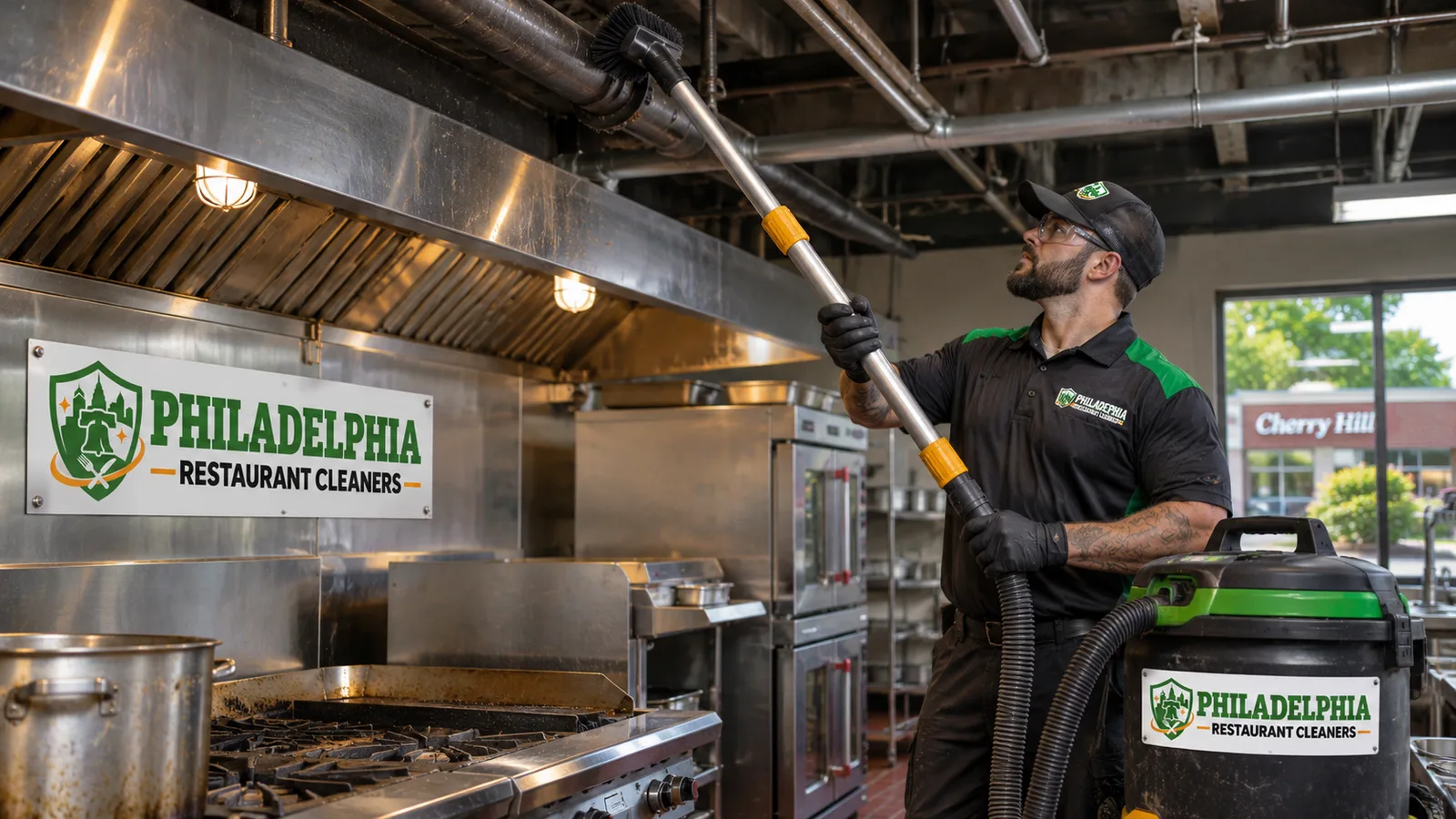
Restaurant High Dusting Cherry Hill addresses the surfaces routine wiping and floor cleaning cannot reach. Exposed ductwork, pipes, ceiling vents, conduit, beams, light housings and the tops of equipment can collect airborne grease and dust. When that buildup remains undisturbed, it can release debris into the kitchen and leave visible residue in open-ceiling dining areas.
Philadelphia Restaurant Cleaners approaches this work as an experienced restaurant service team in Philadelphia, PA serving nearby Cherry Hill businesses with planned access, appropriate tools and attention to active food-service spaces. Before cleaning starts, we identify the surfaces in scope, note sensitive equipment and determine how technicians can reach each area safely. We also discuss operating hours so the work can be scheduled around preparation, service and closing routines.
High dusting is distinct from hood and exhaust-system cleaning.
It focuses on accessible room-side surfaces around the kitchen and other restaurant areas, rather than the internal grease path of an exhaust system. A written scope helps management know which beams, pipes, vents, ceiling components and equipment tops are included.
Request a Callback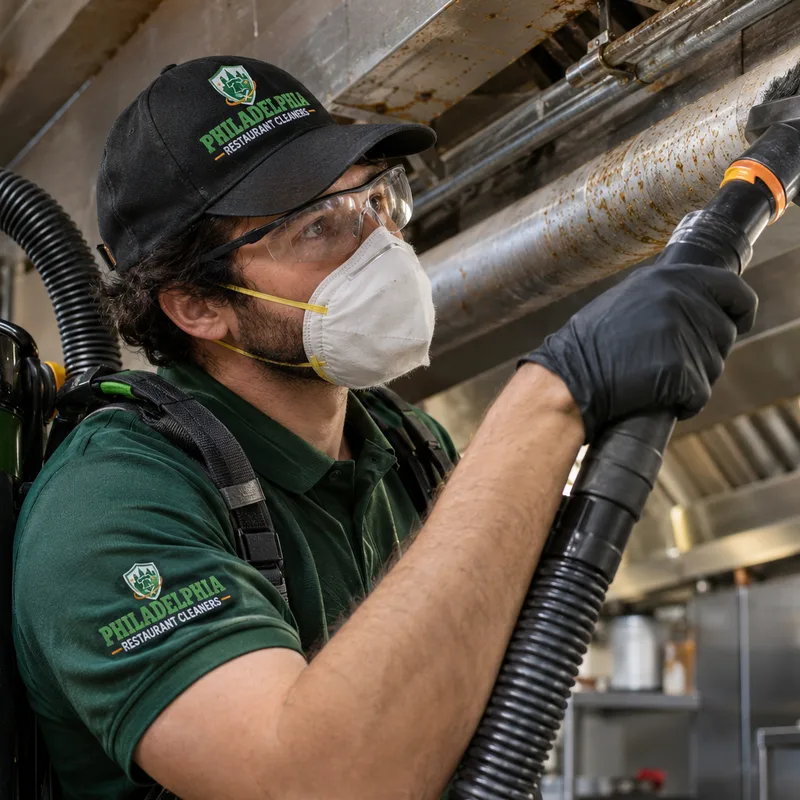
Controlled vacuuming captures dry debris before detailed wiping.
A high-dusting scope may include exposed ceiling beams, overhead pipes, conduit, accessible duct exteriors, sprinkler-pipe exteriors, ceiling vents, fan guards, light fixtures and the upper ledges of walls. The tops of refrigerators, shelving, walk-ins and other stationary equipment may also be addressed when access is safe and the items are included in the agreed scope.
The cleaning method depends on the residue. HEPA-filtered vacuuming and microfiber tools help capture dry dust instead of scattering it. Greasy film may require a compatible degreaser, controlled agitation and careful wiping. Technicians protect preparation surfaces and nearby equipment before work begins, then collect loosened material as the job proceeds. Electrical components, fragile fixtures and surfaces near fire-suppression equipment require added care and may have access limits.
Cherry Hill restaurants include enclosed kitchens as well as dining rooms with exposed ceilings. Guest-facing overhead surfaces often need detail work that leaves a uniform appearance, while back-of-house areas may require more attention to greasy airborne residue. The scope should match the construction and use of each space.
Cooking aerosols can leave a tacky film on nearby overhead surfaces. Dry dust adheres to that film, so ordinary feather dusting may spread residue rather than remove it.
Ceiling height, equipment placement and narrow aisles determine whether extension tools, step platforms or other access equipment are appropriate. These conditions should be reviewed before scheduling.
Exposed ingredients, utensils and preparation surfaces must be removed or protected. Cleaning should occur when food production has stopped and the work zone can be controlled.
Painted ducts, metal pipes, acoustic materials and light housings do not tolerate the same chemistry or moisture. A small compatibility check may be needed before broad cleaning.
We discuss the kitchen layout, ceiling height, operating schedule and areas of concern. Photos or an on-site review can help identify access constraints, sensitive fixtures and the amount of buildup.
The team establishes work zones, protects nearby surfaces and selects extension tools, vacuums, microfiber materials and compatible cleaning products. Restaurant staff should clear exposed food and movable service items before the scheduled start.
Loose material is captured first where practical. Technicians then address adhered residue with controlled application and agitation, working carefully around vents, conduit, fixtures and accessible utility lines.
Cleaned surfaces receive a visual review, collected debris is removed and protective coverings are taken down. Management can review any excluded, damaged or inaccessible areas noted during the work.
Cherry Hill sits directly across the Delaware River from Philadelphia, but its restaurant patterns vary by location. Businesses near the Cherry Hill Mall may need work planned around retail traffic and fixed closing procedures. Restaurants along Route 70 and Route 38 often have busy meal periods and limited room for access equipment during service. In Haddonfield, compact storefronts and older commercial interiors can call for tighter work zones and more reliance on extension tools. Marlton restaurants may have larger dining footprints that make exposed-ceiling cleaning a separate part of the scope.
After-hours scheduling is often the practical choice because food must be secured, cooking should be stopped and access routes need to remain clear. The kitchen may also need time for protected surfaces to be uncovered and the space to be reset before preparation resumes. New Jersey's humid summers can add to the sticky character of grease-laden dust near cooking areas, while winter heating can move settled dry dust through exposed ceiling spaces. Cleaning frequency should be based on cooking volume, ventilation, ceiling design and how quickly visible buildup returns, rather than a generic calendar.
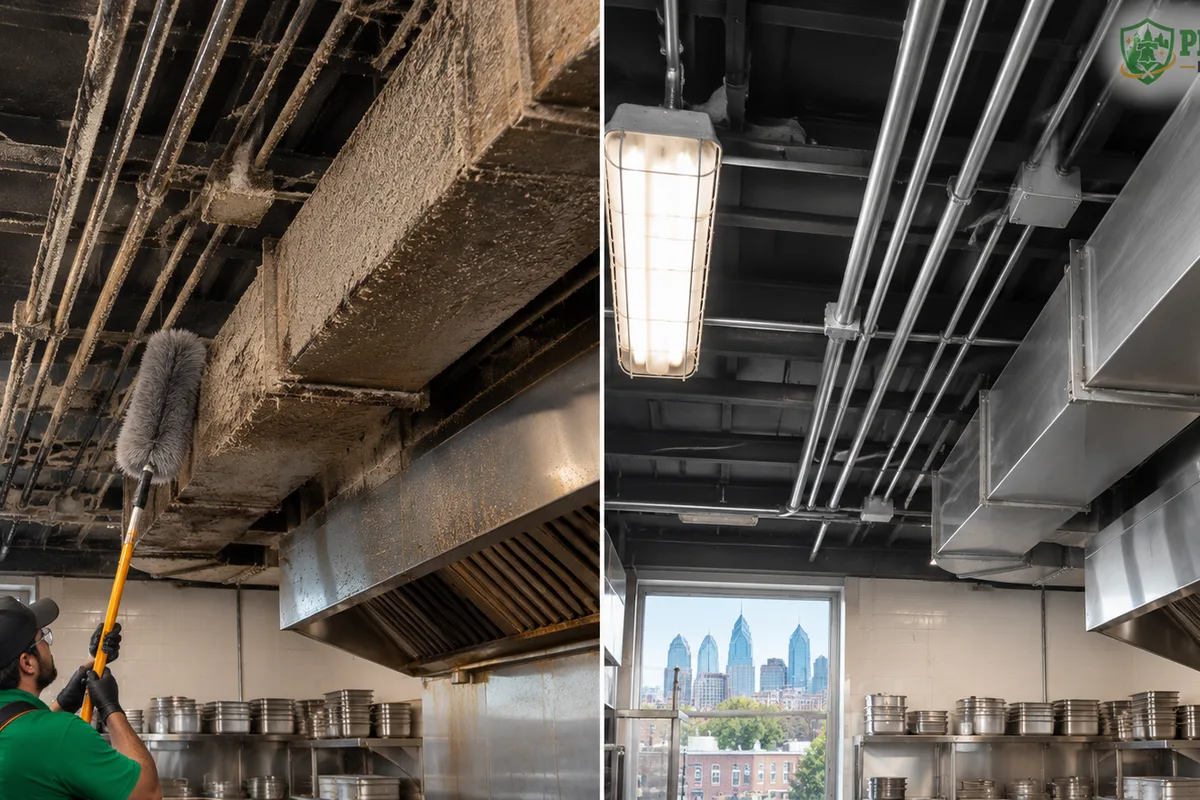
A documented scope makes before-and-after inspection more useful.
Restaurant Kitchen Cleaning Cherry Hill generally addresses reachable work surfaces, equipment exteriors, floors and other areas included in the cleaning plan. High dusting reaches overhead areas that are commonly outside a nightly crew's safe working height. Coordinating the work helps prevent loosened overhead debris from landing on a freshly cleaned floor or preparation area.
High dusting does not replace required maintenance by qualified fire-suppression, electrical, HVAC or exhaust-system professionals. Technicians should not adjust sprinkler heads, open electrical equipment, dismantle ventilation machinery or disturb materials that may require specialist assessment. If an area is unsafe, concealed or outside the agreed work boundary, it should be documented rather than handled without authorization.
Restaurant managers can help the visit run efficiently by identifying alarm procedures, access doors, shutoff restrictions and any fixtures that must remain untouched. A current layout or a short walkthrough is useful when ceilings cross several rooms or when equipment blocks direct access.
Arrange a clear overhead-cleaning scope before buildup becomes harder to remove or begins shedding onto lower surfaces.
Call for a Free QuotePricing depends on ceiling area, height, buildup, access and the number of surfaces included. A small area with light dry dust requires different labor and equipment than a tall open ceiling coated with greasy residue. After-hours requirements, equipment protection and restricted work zones also affect the quote. A site review or clear photographs are typically needed to confirm an accurate written scope.
High dusting is generally best completed when food preparation and guest service have stopped. Cherry Hill locations along busy Route 70 or near the mall may benefit from overnight or closed-day scheduling because technicians need controlled access and clear paths for equipment. Exposed food, utensils and preparation items must be removed or fully protected before work begins.
The duration can range from part of a shift for a limited area to several shifts for a large kitchen and dining room with tall exposed ceilings. Ceiling height, greasy buildup, fixture density and access around stationary equipment have the greatest effect. The expected work window should be established after the scope and access method are reviewed.
The interval should be based on cooking volume, grease production, ventilation performance and visible residue. Restaurants using fryers, grills or solid-fuel cooking may see overhead film return sooner than operations with lighter cooking. Inspection during regular kitchen cleaning can identify fresh buildup before it becomes thick or begins releasing dust.
No, room-side high dusting does not include cleaning inside the grease-exhaust system unless that separate work is explicitly contracted to an appropriately qualified provider. High dusting may cover accessible duct exteriors, nearby pipes and ceiling surfaces. Internal hoods, fans and ducts are a distinct system with separate inspection and service requirements.
Staff should secure food, remove exposed utensils, clear movable items and identify surfaces or equipment that cannot be disturbed. Access routes should remain open, and management should provide any building-entry, alarm or closing instructions. If work is planned near sensitive fixtures or fire-suppression components, those restrictions should be discussed before technicians arrive.
Tell Philadelphia Restaurant Cleaners about the ceiling layout, areas of buildup and preferred work window. We will help define the surfaces, access needs and preparation required for a practical high-dusting scope.
Tell us about your restaurant, schedule, and cleaning needs. We will help define the right service plan for your space.